The Canadian golf industry believes the best way to keep turf plants and vegetation healthy is through the judicious use of turf protection materials, integrated with cultural practices such as Integrated Pest Management (IPM). IPM relies on scientifically-proven plant management techniques to grow healthy plants able to resist pest/disease pressures. Pesticides are used as a last line of defense, and only when disease or pest pressures exceed acceptable natural thresholds.
Canadians are justifiably concerned about claims that some pesticides are being used for cosmetic purposes only and, as a result, may pose a health threat to children. Improper use of a controlled product, or any product for that matter, may be harmful. Both the federal and provincial governments stringently control the approval and application of pesticides in Canada.
In fact, the Pest Management Regulatory Agency of Health Canada carefully oversees the registration and use of any chemical product. Canadian regulations are among the most stringent in the world. In addition, provincial laws and regulations require pesticide applicators to be licensed in their safe use and handling.
Golf superintendents, whose primary responsibility is for the management and maintenance of golf courses, are true stewards of the land. They entered the profession out of a love for nature and are strongly committed to conservation. The demands placed on them for excellent playing conditions have helped to promote their ingenuity in finding ways and means to achieve better conditions without depending on a chemical cure. Indeed, Canadian golf courses have taken steps to reduce their need for controlled products. This can be seen in the dramatic drop in pesticide usage over the past 10 years. That trend is continuing.
According to the Turfgrass Research Center, Rolling Meadows, Illinois, the fear that some people have of pesticides is highly exaggerated, perhaps to the point of paranoia. The available scientific and medical facts do not support concerns about pesticides as a cause of cancer.
In fact, in a 1997 report to the National Cancer Institute of Canada, an ad-hoc panel on pesticides and cancers concluded, it was not aware of any definitive evidence that suggests synthetic pesticides contribute significantly to the overall cancer mortality. The panel added that it did not find any existing evidence that suggests that crop protection chemicals and lawn and garden products are likely to be a major cause of cancer.
Dr. C. Everett Koop, former surgeon-general of the United States has stated, in focusing on the hypothetical risk, like that from pesticides, people often neglect all the other things they could be doing more readily, more legitimately and with greater effect, such as paying attention to smoking, alcohol, exercise, balanced diet, and so on.
The golf industry is concerned the real problem with respect to pesticide use may be overlooked, namely, a lack of consumer education and compliance with label instructions. Controlled products should only be used by those who are properly trained in their safe use and handling. All golf courses have licensed applicators. The industry fully supports any programs for improvements in public education. Further refinements to the control, distribution and sale of these products is also something the golf industry would readily embrace.
The suggestion by some that golf courses are not essential, and thus the use of pesticides is merely cosmetic, overlooks the tremendous benefit golf courses provide to our quality of life and to the overall environment. It is well-documented by turfgrass educators and the Turf Resource Center, that grass and other plants help to modify air pollution, absorb particulate matter and carbon dioxide and prevent soil erosion. They also help supply oxygen while filtering ground water.
Golf facilities work to create an environment that is pleasant and relaxing for golfers as well as being a sanctuary for birds and other wildlife. An 18-hole golf course averages 170 acres. Pesticides are used only on certain portions of the facility. In fact, the most intensely-managed areas are the greens, which represent only two per cent of the total course. The majority of the property often consists of natural low-maintenance areas, which usually provide a home for wildlife and include a diverse variety of native plants and large stands of trees.
Canadians are, per capita, the number one golfing nation in the world. It is estimated that there are five million golfers in Canada or, as the Royal Canadian Golf Association (RCGA) points out, one in five Canadians play golf. Golf is a strong contributor to the overall economy of Canada. There are over 2000 golf courses in Canada. They have added tremendous value to real estate developments and breathed new life in to what was considered marginal land in some areas.
Within cities, golf courses, parks and cemeteries provide the essential green space required by the general public to ease the stress of urban life. According to Landscape Ontario, the horticultural industry is a $7 billion business across Canada with over 20,000 companies employing over 100,000 people. Horticulture programs have grown nine per cent per year in the last two years (source: Statistics Canada) and all indicators point to continued growth.
The golf industry in Canada is quite diverse and represents Canadians from all walks of life. The industry is supported by several national associations including: Canadian Golf Industry Association (CGIA), Canadian Golf Superintendents Association (CGSA), Canadian Ladies Golf Association (CLGA), Canadian Professional Golfers Association (CPGA), Canadian Professional Golf Tour (CPGT), Canadian Society of Club Managers (CSCM), National Golf Course Owners Association (NGCOA) and Royal Canadian Golf Association (RCGA).
These associations are concerned with preserving and protecting the environment and human health. They have been proactive in many ways. For example, they are active supporters of the Canadian Turfgrass Research Foundation, which, among other things, supports research into finding alternatives to pesticide use. Several associations also endorse the Audubon Cooperative Sanctuary Program for golf courses in Canada.
These are samples of some of the environmental initiatives the golf community has been involved with. More information is available by contacting any of the above associations directly.
Golf is a beautiful and sometimes challenging game. Its contribution to Canada's lifestyle and economy are enormous. As a leader in the appropriate uses of specific turf control products, the golf industry endorses programs for consumer education and supports Health Canada's role in controlling the sale, distribution and use of all turf control products.
Policy Statement © of Canadian Golf Superintendents Association - Adopted by British Columbia Superintendents Association
By-Law Amendment - December 2005
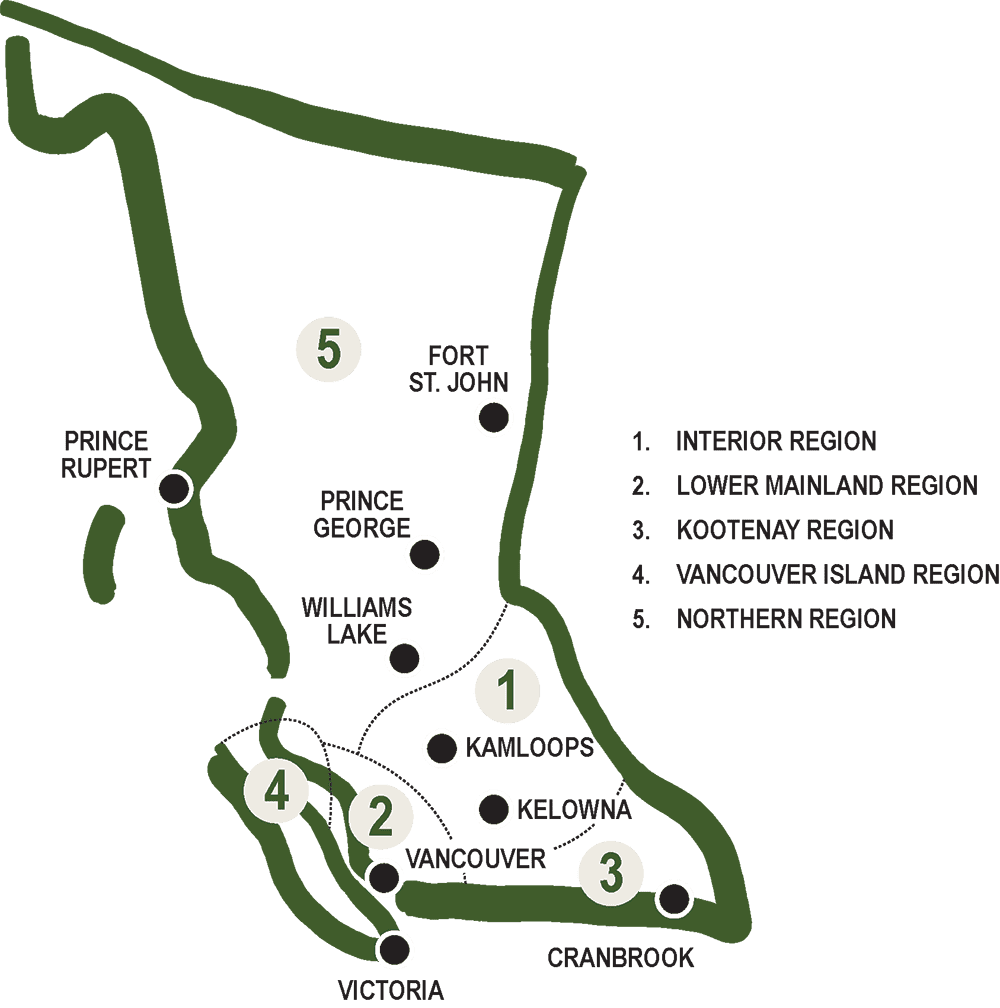
In lieu of what has transpired over the past year, in that industry representatives of the golf course industry are allowed to become members of and be active participants in all five regions which are encompassed by the B.C.G.S.A., it is felt that it would be appropriate to recognize their value as members by giving them distinction within the "Member Classification" section, which is Section 2, of our Society Act Constitution.
Therefore, the proposed bylaw, in keeping with the same nature of those classifications already approved and ratified, is brought forward to the membership of the B.C.G.S.A. for their approval and ratification.
The proposed bylaw reads as follows:
Class I – To qualify as a Class I member, an applicant shall be a sales or technical representative of a company which services the golf course industry. Application must be made to the Board of Directors who will be the sole judge of the applicant’s acceptance. Class I members will be non-voting members with all the privileges of the Association, except that of holding office.
If the aforesaid bylaw is approved and ratified it will be incorporated into our Society Act Constitution under Section 2, sub-section I.
|